
Surfing in Gran Canaria: Discover the Best Beaches and Spots to Practice it
Gran Canaria is an outstanding destination for surf lovers, thanks to its varied offer of beaches and ideal conditions. The island offers waves suitable for both beginners and experienced surfers, making it an attractive place all year round. The mild climate and the diversity of spots allow surfing at different times of the year. From the north, with its challenging waves, to the south, with calmer beaches, there are options for all levels. Gran Canaria has established itself as a true paradise for surfers.
Surfing in Gran Canaria can be enjoyed all year round thanks to its privileged climate and the quality of its waves. The island has a wide variety of spots for all levels, from beginners to experienced surfers. In addition, there are surf schools,
equipment rental and competitions that make Gran Canaria an ideal destination for lovers of this sport. Whether you are looking to improve your technique or if you want to get started in the world of surfing, here you will find the perfect place to glide over the waves.
1. Main Surf Spots in Gran Canaria
Gran Canaria: An Ideal Surfing Destination
Gran Canaria is presented as a privileged place for surfing, offering a diverse environment with beaches that have ideal conditions for surfers of all levels. Its geography and climate are determining factors to enjoy this exciting sport.

Climate and Sea Conditions
The climate in Gran Canaria is temperate throughout the year, characterized by pleasant temperatures that favor the practice of surfing. The combination of constant winds and the geographical configuration of the island are elements that contribute to the creation of waves of different characteristics. This allows both beginners and more experienced surfers to find their place on the various beaches of the island.

Water Temperature
The water temperature in Gran Canaria varies between 18 and 24 degrees Celsius throughout the year. This variation makes for delightful surfing, as most surfers can enjoy a comfortable experience without the need for wetsuits in many months. In winter, it may be advisable to wear a lighter wetsuit, while in summer, with the higher water temperature, it is common to surf with or without a shorty suit.

Best Time of the Year for Surfing
The best surfing conditions in Gran Canaria are between October and March. During these months, the swell from the Atlantic Ocean generates bigger and more powerful waves, ideal for intermediate and advanced surfers. However, the southern beaches, such as Playa del Inglés, offer softer waves during the summer, being an excellent starting point for those who want to get started in this sport.
3. Surf Schools in Gran Canaria
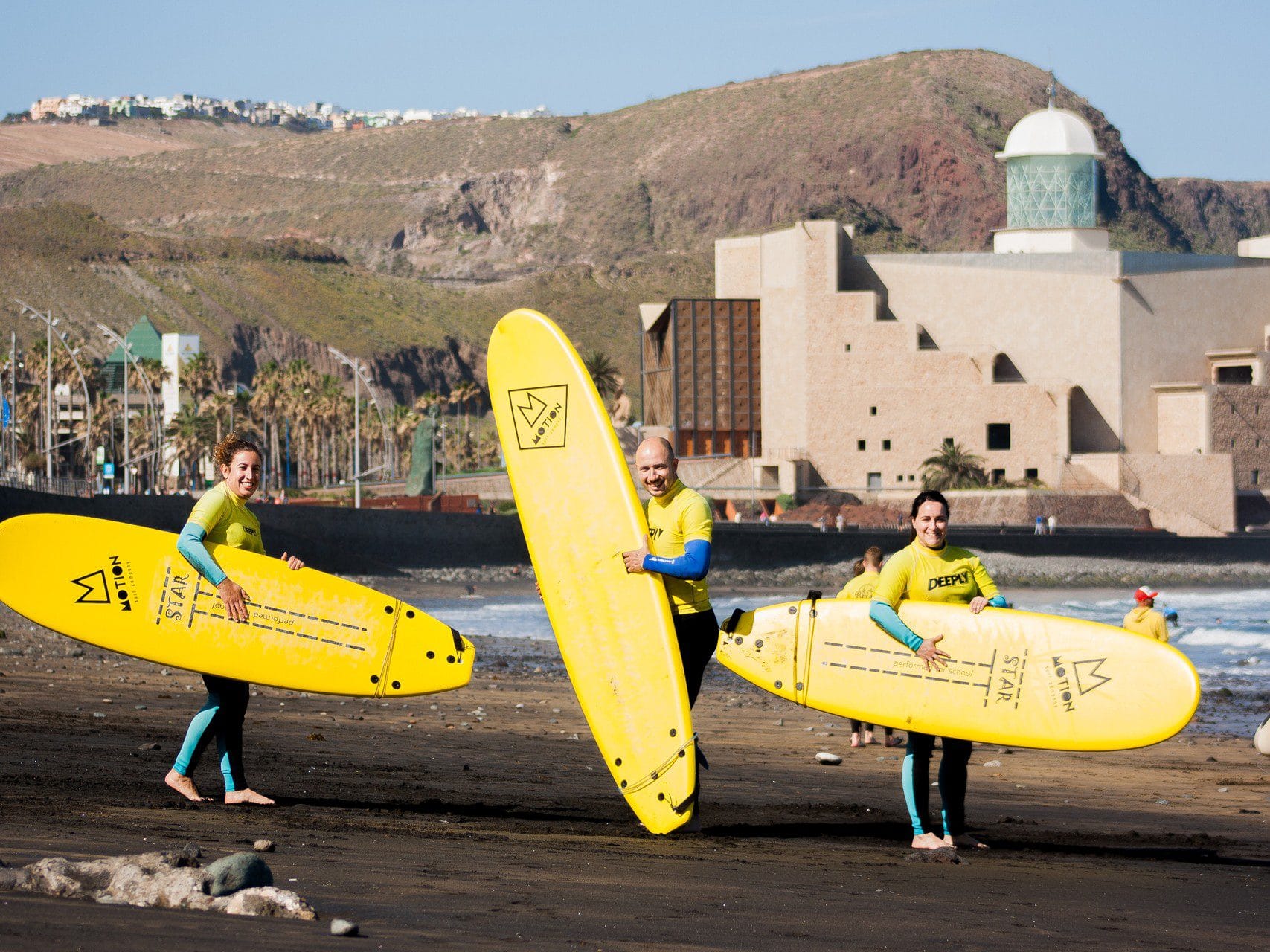
Gran Canaria has a variety of surf schools that offer training for all levels, from beginners to experts. These schools provide the necessary equipment and a wide range of programs and activities related to surfing and other water sports.

Mojo Surf
Programs and Activities Offered
Mojo Surf is one of the leading schools in Gran Canaria, known for its focus on practical and fun learning. They offer surf lessons adapted to different levels, as well as camps for groups. Services include both individual and group classes, ensuring personalized attention. Complementary activities such as yoga, paddle surfing and hiking are also organized.
Pricing and Bonds
Prices at Mojo Surf vary according to the type of class and duration. Vouchers are offered that allow a discount for the purchase of several classes, which is convenient for those looking for continuous training. With affordable prices, excellent value for money is assured.

3RJ Surftime
Types of Classes and Benefits
3RJ Surftime specializes in lessons for beginners and also has options for advanced surfers. Classes are structured to maximize time in the water and improve technique quickly. Practical sessions are usually held in different spots on the island, adapting the teachings to the sea conditions and the level of the students.
Location and Surf Zones
This school is located in a strategic location in Gran Canaria, which allows access to several beaches with different surf conditions. Their instructors know the best spots well, which guarantees an enriching and safe learning experience.
La Brisa School
Classes for Children and Adults
La Brisa School is dedicated to teaching surfing in a dynamic and lively environment, offering classes for both children and adults. Its focus is on fun and safety, providing a perfect environment for the youngest to learn and enjoy the ocean. Classes are tailored to the needs of each group, encouraging learning in a friendly environment.
Combined Water Sports Offers
This school is not only limited to surfing, but also organizes activities combined with other water sports, such as paddle surfing and windsurfing. Flexible offerings allow participants to explore multiple water disciplines, providing a comprehensive and varied experience in the water.
4. Practical Tips for Surfing in Gran Canaria
Surfing in Gran Canaria requires taking into account several essential aspects to enjoy a safe and rewarding experience. From the right equipment to the main safety regulations, it is essential to be well prepared.

Necessary Equipment
Having the right equipment is crucial for a good surfing experience. Some basic elements are:
- Surfboard: Choose the right board according to your skill level and conditions. There are different types, such as short boards for fast waves and long boards for beginners.
- Wetsuit: Especially useful during the colder months. It allows you to maintain your body temperature, which prolongs your surfing sessions.
- Leash: This rope connects the board to the surfer’s foot, preventing the board from moving too far away in the event of a fall.
- Board wax: Provides additional grip on the board surface, ensuring that the surfer does not slip.

Basic Safety Standards
Safety in the water is paramount. Following a few simple rules can help prevent accidents and enjoy surfing in Gran Canaria:
- Know the environment: Familiarize yourself with the beach, wave patterns and currents. It is important to respect local signs and recommendations.
- Do not surf alone: It is always advisable to have company. If a problem occurs, there will always be someone who can help.
- Be respectful in the water: Giving way to other surfers and avoiding conflictive situations is essential for a safe and pleasant environment.
- Identify weather conditions: Before entering the water, it is vital to check sea conditions and weather forecasts. Variations in the weather can affect the waves.
Best Websites to Check Wave Forecasts
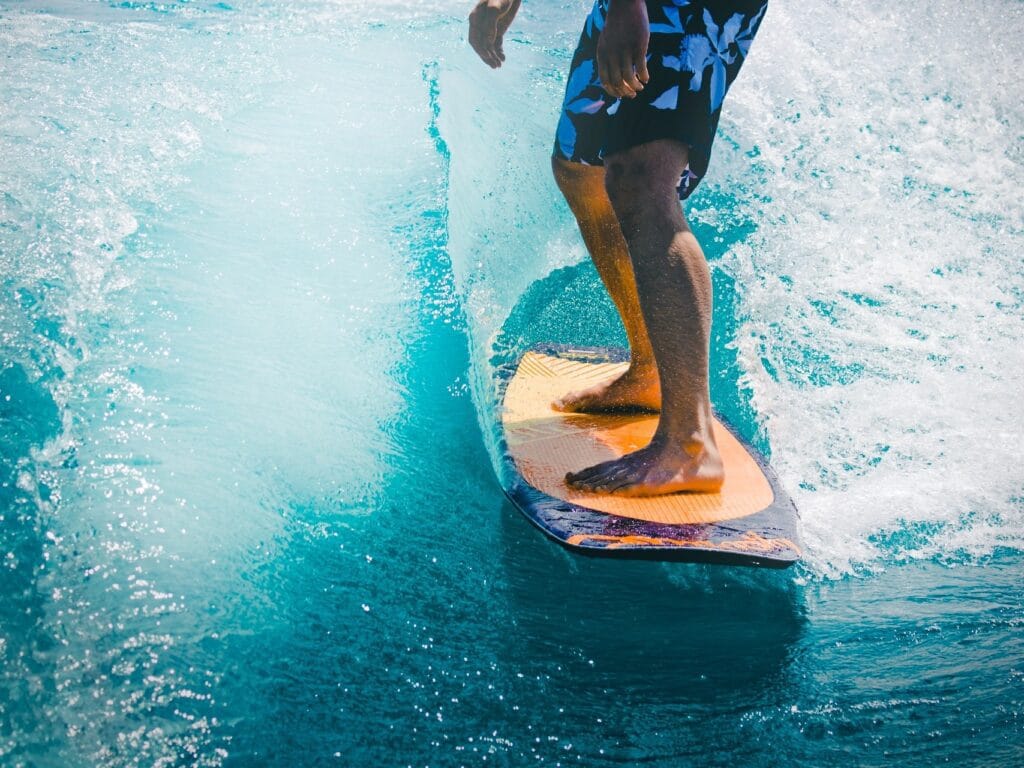
There are online resources that provide accurate information on sea conditions. Some of the best sites to consult include:
- Surfline: Offers detailed wave forecasts, including real-time reports from different beaches.
- Magicseaweed: This website provides information about waves and sea activity, helping surfers to plan their sessions.
- Windguru: Ideal for consulting wind conditions and their influence on waves.