
The 10 best hiking trails with children in Gran Canaria to enjoy with the whole family
Gran Canaria offers a variety of hiking trails ideal for families with children. These routes are accessible, have breathtaking scenery and allow children to explore nature. Each route has unique features that encourage adventure and learning. Below are the ten best hiking trails with children in Gran Canaria, with practical details about each one.
Hiking in Gran Canaria can be done all year round thanks to its privileged climate. The Department of Environment of the Cabildo de Gran Canaria has presented a website that contains more than 100 trails, classified by length and difficulty.
The website has a map on which linear, circular and long-distance trails are marked. Each route has a downloadable information sheet in pdf, kml and gpx, in order to integrate them into mobile hiking applications and ensure orientation.
- 1. The best hiking trails with children: discover our guide.
- 2. Blue Tajinaste Route
- 3. Los Cernícalos Ravine
- 4. Hiking in the Tilos of Moya
- 5. Circular to Roque Nublo
- 6. Hiking in the Azuaje Ravine
- 7. Route to Charco Azul del Risco
- 8. Bandama Caldera
- 9. Circular to the Pino Santo Caldera
- 10. Path to the mountain of Agüimes
- 11. Ascent to the Amagro Peak
1. The best hiking trails with children: discover our guide.
2. Blue Tajinaste Route
The Tajinaste Azul Route is one of the most emblematic experiences in Gran Canaria. Its natural beauty and accessibility make it an ideal option to enjoy with the family.
Characteristics of the route
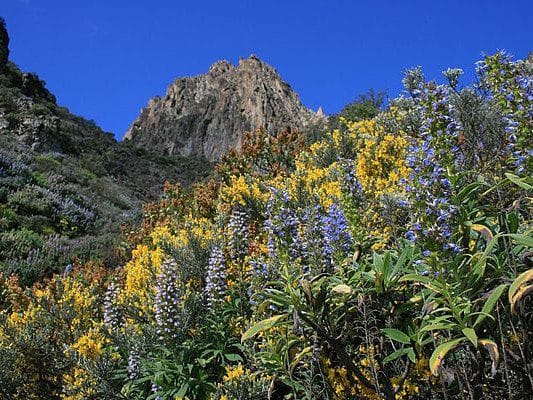
This trail starts at the impressive Caldera de los Marteles and descends to Tenteniguada, in the municipality of Valsequillo. The route is accessible and has a route adapted for the different abilities of visitors. Although some parts can be a bit more challenging, families can choose to do just the first section, where the most outstanding specimens of the local flora are found.

Flowering of blue tajinaste
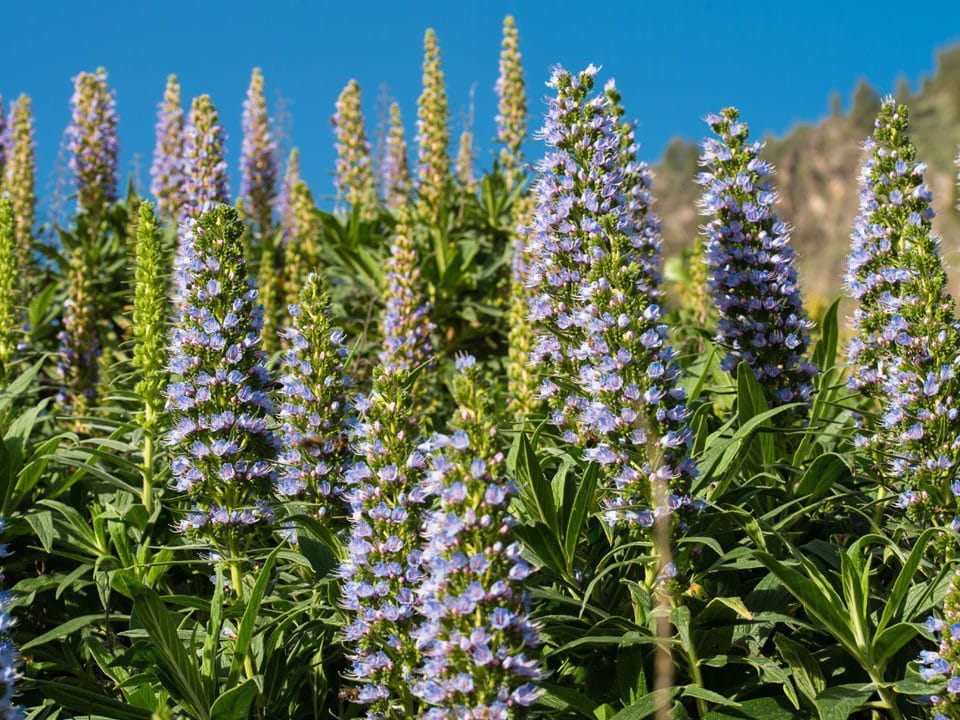
The blue tajinaste (Echium callithyrsum) is the jewel of this route, blooming between April and May. During this season, the landscape is transformed as thousands of bright blue flowers open, creating a stunning visual spectacle. This is the time when families can enjoy the beauty of the tajinaste at its best, delighting both adults and children who can learn about this endemic species of the island.
How to get there and recommendations
To access this route, take the GC-130 road, which connects Telde with La Cumbre. The start of the route is located at the Caldera de los Marteles viewpoint, where there are adequate parking facilities. It is recommended to bring enough water, sun protection and a healthy snack, since the hike can be more demanding for children.
3. Los Cernícalos Ravine
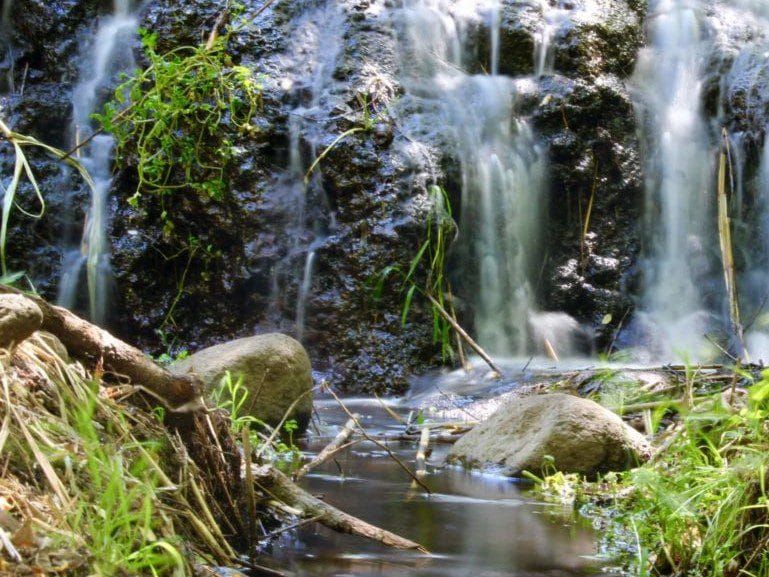
The Barranco de los Cernícalos is presented as a small natural paradise in Gran Canaria, where water flows all year round, providing a refreshing experience for the little ones. This trail invites families to enjoy a unique and fascinating environment.
Adventure in the water
In this route, water is the protagonist. Along the route, you can find several waterfalls that captivate the attention of children. The combination of an easy trail with the sound and sight of flowing water creates an ideal environment for the little ones to feel motivated and have fun.
- Water noises: The soothing sound of waterfalls provides a cozy setting.
- Playgrounds: Several areas invite children to play and explore, creating a playful environment during the walk.
- Natural refreshments: You can find ponds where children can refresh themselves, making this a memorable experience.
Flora and fauna of the ravine
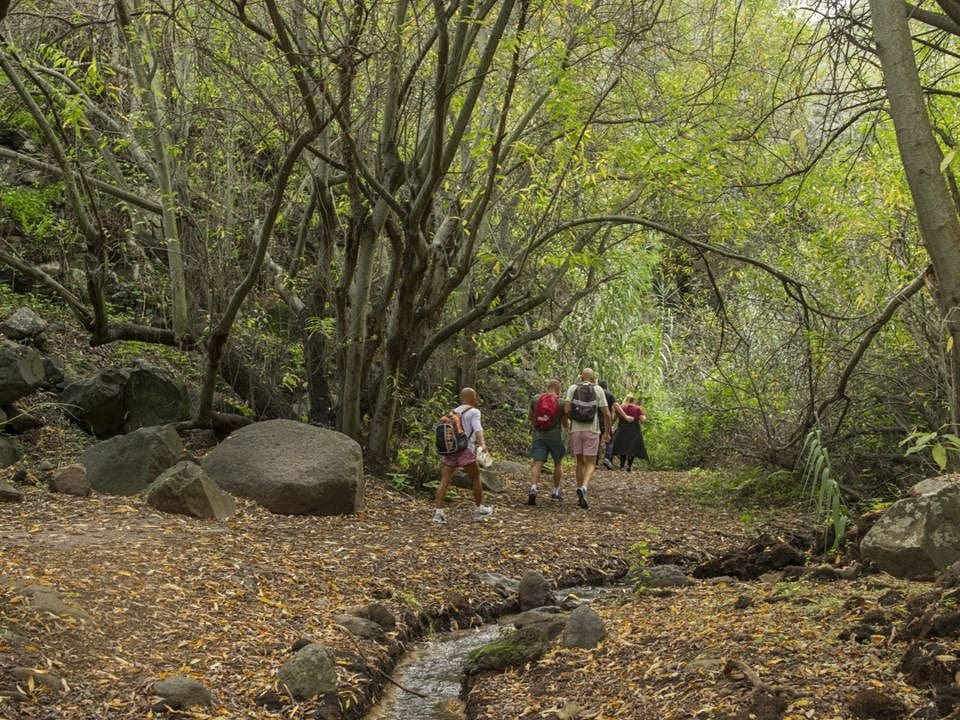
The Barranco de los Cernícalos is not only a place of scenic beauty, but also a rich and diverse ecosystem. During the hike, it is possible to observe endemic plant species that contribute to the uniqueness of the place. The varied vegetation includes trees such as canary willows, creating a refuge for various species of birds and small animals.
Main plant species:
- Canary willow: This tree is characteristic of the ravine and plays a crucial role in the local ecosystem.
- Aromatic plants: They are found on the floor of the ravine, providing scents that embellish the route.
Fauna observed:
- Endemic birds: With luck, several native species can be seen nesting in the area.
- Small mammals: Often, the more observant can see rabbits and other mammals in their natural habitats.

Access and tips
Access to Barranco de los Cernícalos is easy and well marked. It is located near Telde, and the route begins in the Adolfo Santana recreational area, where parking is available. It is recommended to wear appropriate footwear to walk the trail and to be aware of the importance of respecting the natural environment surrounding the ravine.
- Comfortable footwear: Wearing hiking shoes is essential for safe hiking.
- Water and snacks: Bring enough water and snacks to keep the children’s energy up during the route.
- Supervision: It is essential to keep an eye on the little ones, especially near water.
4. Hiking in the Tilos of Moya
Los Tilos de Moya is an ideal destination for family hiking, offering an educational and recreational experience in the middle of nature.

Environmental education
The route in the Tilos de Moya is an excellent opportunity for children to learn about the environment. Along the route, you can observe various specimens of native flora. Many trees and plants are labeled, which makes it easy for children to learn about local biodiversity.

Touring the laurel forest
This trail passes through one of the last remnants of laurel forest in Gran Canaria. The laurel forest is a type of tropical rainforest that is home to a variety of species of flora and fauna. During the hike, families can enjoy the cool shade provided by the trees, which makes the tour even more pleasant.
- The route is about two kilometers long, ideal for children.
- The vegetation is dense and offers a perfect place to observe birds and other animals.
- Children can learn to identify the different types of trees and plants found along the trail.

Access and precautions
Access to the route of the Tilos de Moya is easy, since it is well signposted. It can be reached from the road that connects Moya and Fontanales, finding parking nearby. In spite of the ease of the route, it is advisable to take some precautions:
- Wear appropriate footwear and comfortable walking clothes.
- Protect yourself from the sun with a hat and sunscreen, especially on sunny days.
- Carry enough water to stay hydrated during the trip.
5. Circular to Roque Nublo
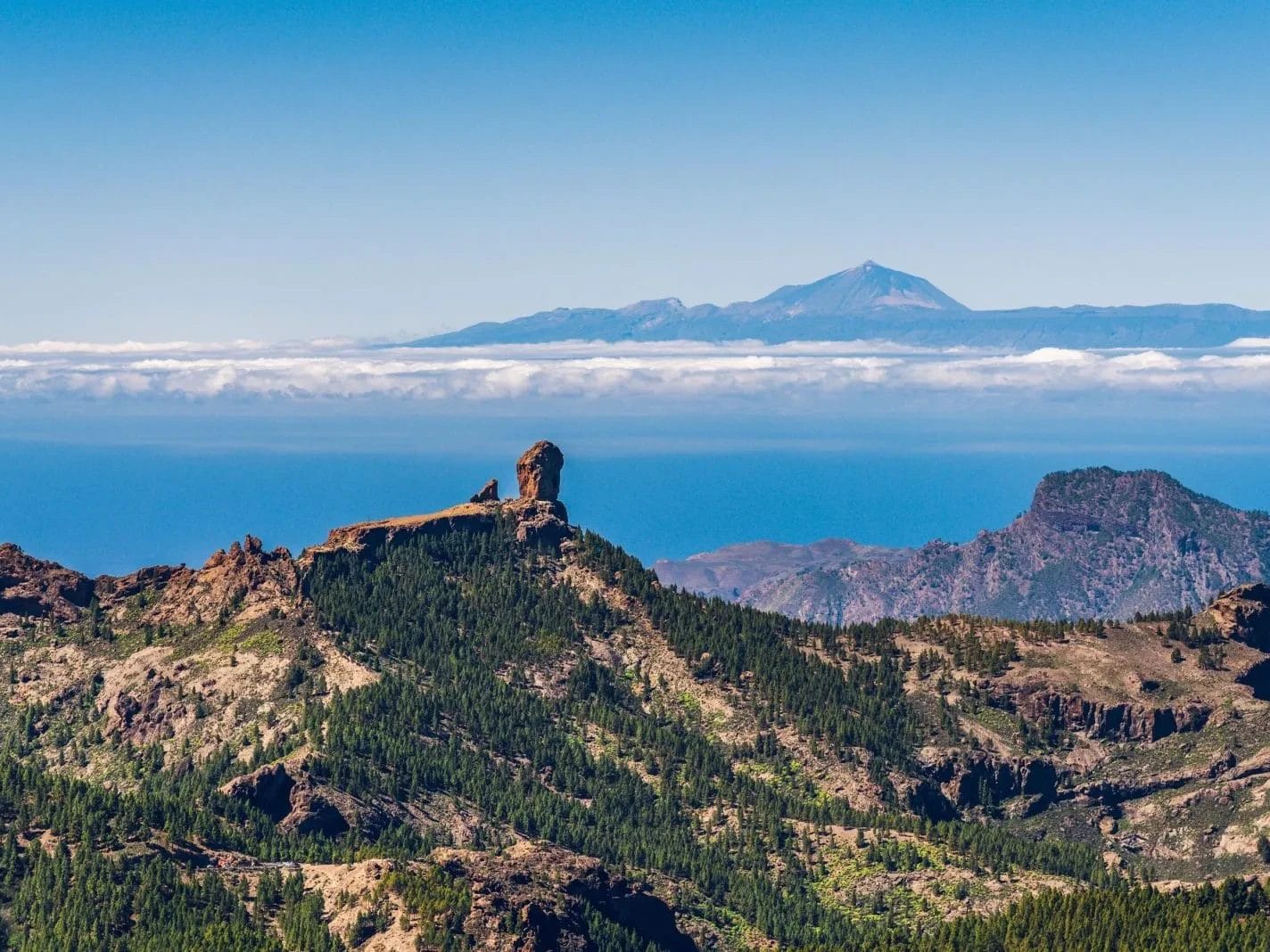
The circular route to Roque Nublo is one of the most emblematic and appreciated in Gran Canaria. This route allows families to enjoy an extraordinary day in nature, surrounded by impressive rock formations and spectacular landscapes.
Views from Roque Nublo
One of the main attractions of this trail are the views that can be seen from the top of Roque Nublo. This monolith, considered one of the symbols of Gran Canaria, offers panoramic views that extend all the way to the ocean. Points of interest include:
- The summits of the island, highlighting the Pico de las Nieves.
- La Caldera de Tejeda, famous for its natural beauty.
- The landscape of the north of Gran Canaria, where the contrasts between vegetation and arid land can be appreciated.
These views are not only breathtaking, but also provide perfect opportunities to capture memorable family moments.

Advice for families
The tour may not be the easiest for children, so it is recommended that parents supervise the pace of the little ones, especially in the steepest sections. Some recommendations are suggested to make the experience more enjoyable:
- Walk at a relaxed pace and take breaks to enjoy the scenery.
- Carry enough water and healthy snacks to replenish energy.
- Use appropriate footwear for the mountain and sun protection.
Being prepared for the different terrains abounds in safety and enjoyment for everyone during the hike.

How to get to the tour
Accessing the trail that leads to Roque Nublo is easy. It starts on the GC-600 road, which connects with Llanos de la Pez. From there, there are indicators that facilitate the arrival to the starting point. Parking in the area is ample, which facilitates access for families. It is also advisable to arrive early to avoid crowds and enjoy the tranquility of the surroundings.
The route is well marked and allows you to explore different angles of this monolith, making the experience practical and rewarding. Explanations on information panels along the way help to enrich your knowledge of the area as you walk.
6. Hiking in the Azuaje Ravine
The Barranco de Azuaje offers a privileged environment for hiking with the family. With its natural landscapes and rich biodiversity, this route is perfect for learning and enjoying nature.
Biodiversity exploration
This ravine is a true refuge of nature. Its ecosystem is composed of a varied fauna and flora that includes endemic species of Gran Canaria. Among the most outstanding trees are the canary willows and palm trees. Hikers have the opportunity to observe:
- Varieties of birds such as blue finches and blackbirds.
- Plant species such as canary pine and water pitcher.
- Insects and small mammals that complete the ecosystem of the ravine.
This natural environment is conducive to education about the importance of environmental conservation, making it an ideal place for children to learn about local biodiversity while having fun exploring.

Waterfalls and places of interest
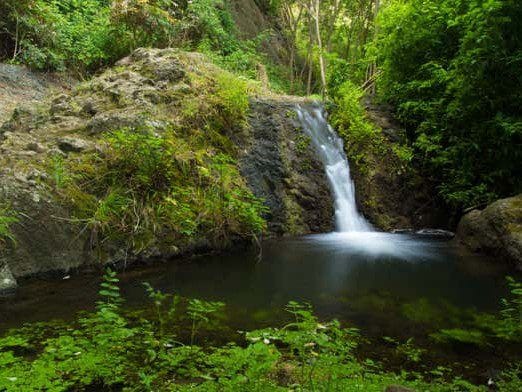
The tour through the Azuaje Ravine is a visual delight. Along the trail, visitors can find several waterfalls that bring freshness and beauty to the route. Among the most outstanding places of interest are:
- The waterfalls, where it is possible to observe the water flowing between the rocks.
- Natural viewpoints from where you can appreciate the majesty of the ravine.
- Recreational areas ideal for resting and enjoying a picnic with the family.
Children will be thrilled to see the small waterfalls and will be able to play in the water areas. These features make the experience unforgettable.

Access guide
Access to the Barranco de Azuaje is easy. It can be reached by car taking the GC-350 road between the municipalities of Firgas and Moya. There are several signs indicating the way to the ravine.
Parking is easy to find at the trailhead, making it easy for families with children. Although the trail is accessible, it is advisable to bring comfortable shoes and water to stay hydrated during the hike. The route is relatively short, allowing you to enjoy the surroundings without rushing.
7. Route to Charco Azul del Risco
The route to Charco Azul del Risco is a perfect option to enjoy a day outdoors with the family. This trail is accessible and offers spectacular views, as well as the opportunity for a refreshing swim in a stunning natural setting.

Natural beauty of the environment
The hike to Charco Azul takes place through landscapes of great beauty, where laurel forests and native vegetation adorn the path. During the hike, you can observe rock formations and river areas that provide a special visual attraction. The typical flora of the region, as well as the endemic fauna, make the walk even more interesting and educational for children.

Enjoying a family swim
One of the main attractions of this route is, without a doubt, the Charco Azul. This beautiful natural pond offers an ideal place for families to stop and enjoy a swim. Children can play and explore the safe environment of the pond, while adults can relax and enjoy the views. It is a perfect area to share unique moments in a fresh and natural environment.

Directions
To reach the beginning of the route, it is recommended to access from Agaete, where you can easily park your car. From there, follow a well-marked path that leads to Charco Azul. The route is short, which makes it ideal for families. However, it is important to pay attention to the parts of the path that can be slippery, especially after rainfall.
- Easy and accessible route, suitable for children.
- Signposted routes from Agaete with parking nearby.
- Caution on slippery sections.
8. Bandama Caldera
The Caldera de Bandama is an impressive volcanic crater that offers a unique experience for the whole family to enjoy. Located in the north of Gran Canaria, it is an ideal place to explore the geology and nature of the island.

Volcanic experience for families
This caldera is part of a fascinating volcanic landscape, with a depth of 200 meters and a diameter of 1,000 meters. A tour of its interior allows visitors to observe the geological formations, as well as the vegetation that has thrived on its slopes. This environment is perfect for teaching children about the volcanic history of Gran Canaria and the importance of environmental conservation.

Routes and efforts required
The main route around the caldera is accessible for families and is approximately 3 kilometers long. Although it is not excessively difficult, it should be noted that the return trip involves an ascent that can be demanding. It is advisable to carry water and make frequent stops, especially for younger children. The route may include:
- Dirt and gravel road, easy to follow.
- Adequate signage to guide you along the route.
- Several areas to rest and enjoy the views.

Best way to access
Getting to the Caldera de Bandama is easy. It is accessible by car to a nearby parking lot, facilitating the start of the hike. The directions from Las Palmas are clear, allowing families to find the entrance without complications. It is recommended to visit in the morning or at sunset to enjoy the best views and avoid the hottest hours.
In addition, the weather should be considered before the visit, since on rainy days there may be mud on the trail, which would complicate the tour with children. This natural space, with its biodiversity and geological history, offers families a perfect opportunity to connect with nature in a fun and educational way.
9. Circular to the Pino Santo Caldera
The Circular to the Caldera de Pino Santo is an excellent option to enjoy a day of family hiking. This little-known route offers exceptional peace and natural beauty.
Views and nature in the caldera
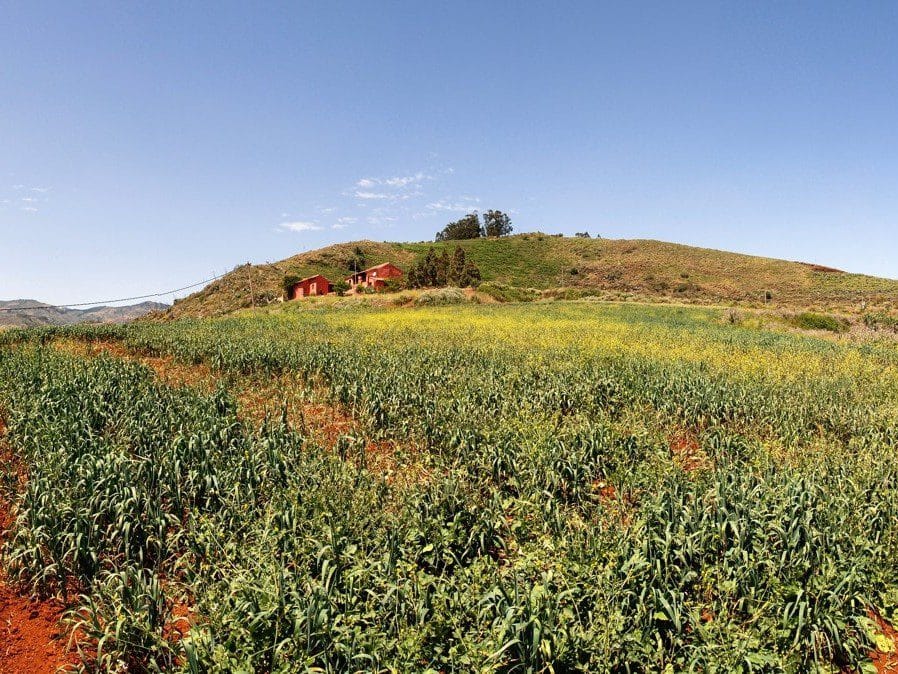
Along the way, hikers can enjoy breathtaking panoramic views of the island and its diverse geography. The caldera is surrounded by mountains and forests that create an idyllic setting for a family hike. The Canary flora stands out in this area, with native species such as pines and palm trees (endpoint) that embellish the landscape.
The natural viewpoints are one of the main attractions, providing excellent photo opportunities. It is an ideal place for bird watching and enjoying nature’s song, making it a perfect destination for educating children about the biodiversity that characterizes Gran Canaria.

Planning the hike
It is advisable to plan the hike in advance. The route is approximately 6 kilometers long, which makes it an accessible option for children. It is advisable to bring enough water and some food to enjoy a picnic in a natural environment. Consider appropriate clothing, with comfortable shoes and sun protection, is essential to ensure the welfare of all family members.
We suggest starting the hike early in the morning to avoid the hottest hours of the day and enjoy the coolness of the morning. Apart from the above, it is advisable to take breaks at scenic points and in areas where children can explore without risk.
How to start the tour
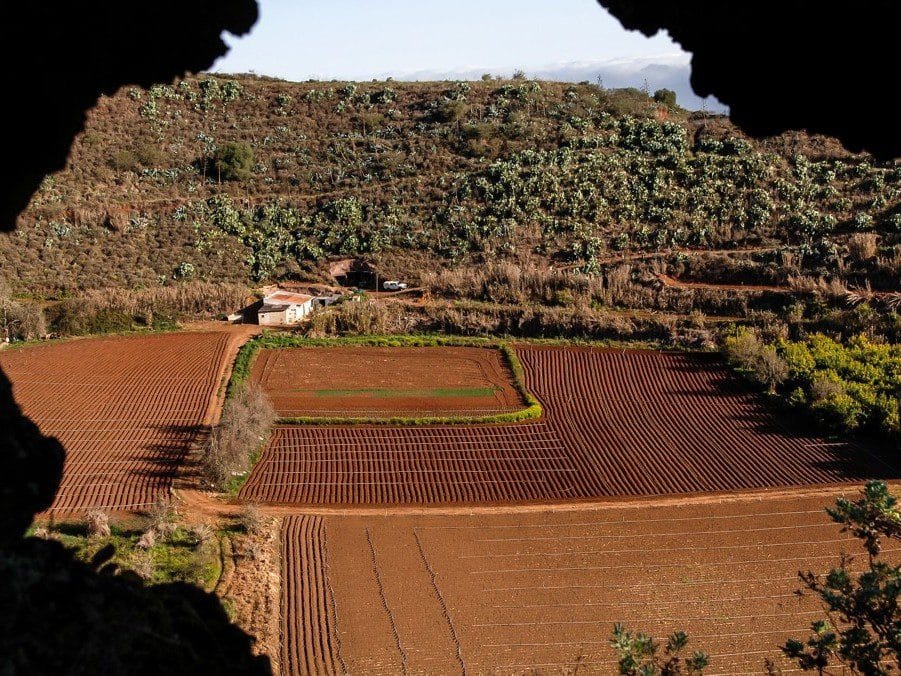
The access to the beginning of the route is easy. You can take the road from Teror, following the signs to the caldera. There is a parking lot where you can easily leave your car.
Once at the beginning of the trail, hikers will be greeted by a sign indicating the route. It is important to follow the signs so as not to get lost along the way. With this, the trail promises an exciting and educational experience for the whole family, providing direct contact with nature in its purest state.
10. Path to the mountain of Agüimes
This trail is an excellent option for those families who wish to combine contact with nature and cultural enrichment through a tour that keeps the curiosity of the little ones.

Cultural heritage along the route
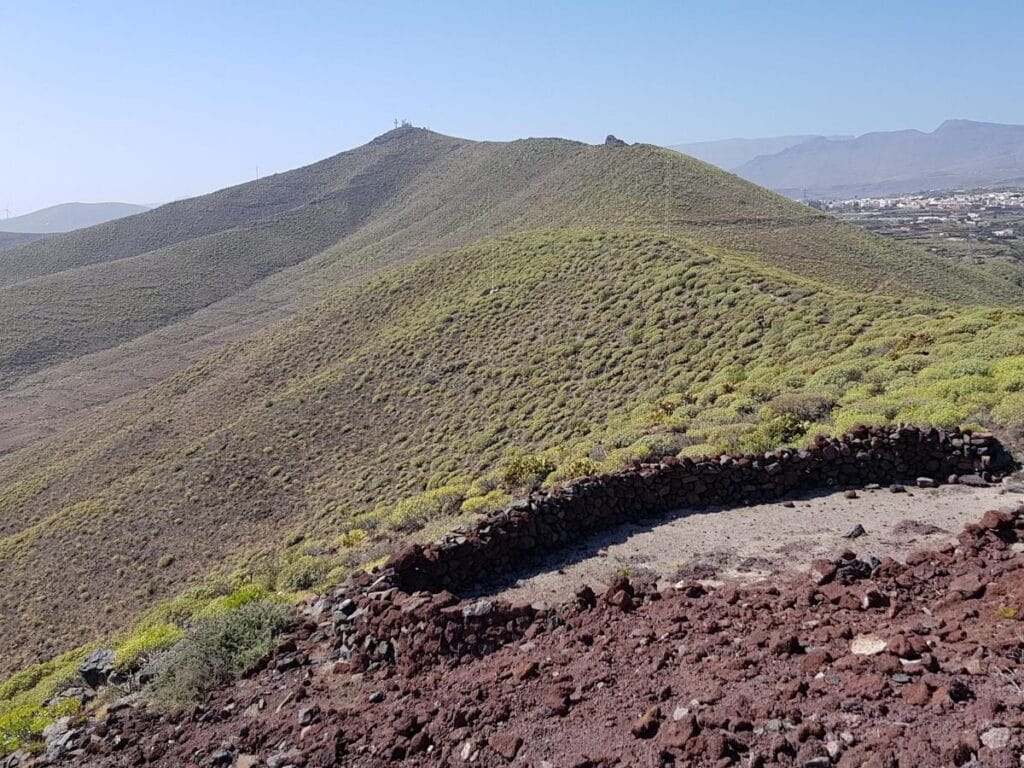
The trail to the mountain of Agüimes allows hikers to enjoy a natural environment while encountering significant elements of local history. Cultural highlights include:
- Cave engravings of the Hombre de Guayadeque, which are a legacy of the ancient aboriginal communities of the island.
- The cave houses, which provide a glimpse into how the ancient inhabitants lived, creating an interesting contrast to modern island life.
- The ruins of ancient buildings, which tell stories about traditional farming and herding in the region.

Fun in the cave houses
Cave houses are an exceptional attraction for children. These structures are a fundamental part of the landscape and provide a unique experience when exploring them. Some features that stand out are:
- Original designs that have been adapted to the climatic conditions of the island.
- Wide spaces where children can run and play, which makes this place an ideal place to rest during the excursion.
- Opportunities to learn about the history of local architecture and how ancient families lived in harmony with the environment.
Access and suggested route
The trailhead is located near Agüimes, providing easy access for families wishing to enjoy this route. Some recommendations for access are:
- Follow the signs along the way, making sure to stay on the marked trails to ensure everyone’s safety.
- Bring plenty of water and healthy snacks, as the hike can be a bit demanding in some sections.
- Start the tour in the morning to avoid the midday heat and fully enjoy the experience.
11. Ascent to the Amagro Peak
The ascent to Pico de Amagro represents an exciting adventure for families who want to enjoy spectacular views and intimate contact with nature. This challenging hike combines effort and visual rewards at every step.
Challenge and spectacular panoramic views
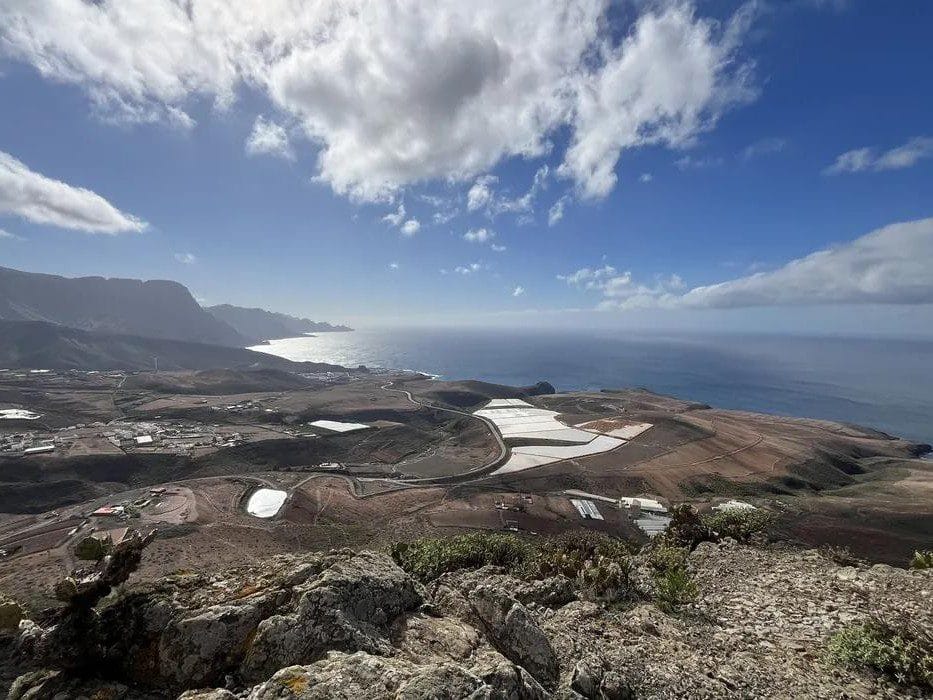
The route up to Pico de Amagro, which rises 1,339 meters above sea level, offers a challenge that can be overcome by families with an intermediate level of fitness. Although the route has some steep sections, most of the trails are accessible. Upon reaching the summit, you can enjoy a breathtaking panoramic view of the north of the island. The surrounding mountains and the Atlantic Ocean merge into an unforgettable visual spectacle.
Flora and fauna of the area
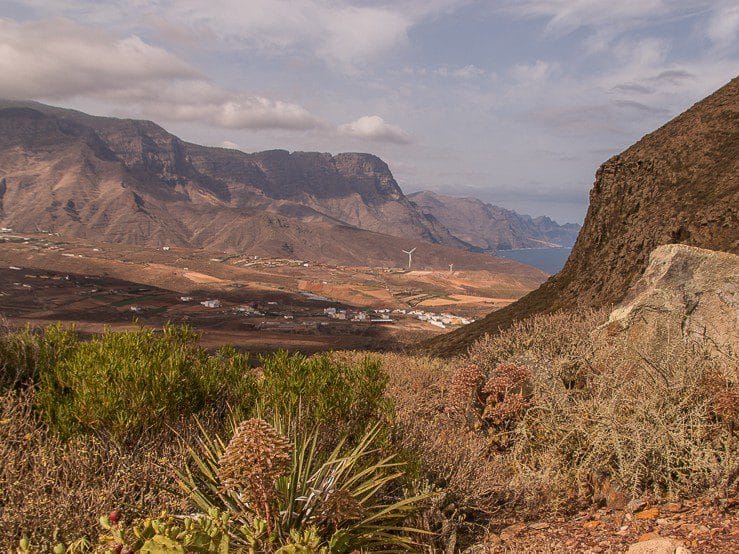
The ecosystem surrounding Pico de Amagro is surprisingly diverse. Among the flora species, you can find canary pines, scrublands and some endemic plants that are home to various birds and small mammals. The sighting of local species such as the blue finch is an experience that will delight children. The presence of butterflies and other insects also adds an educational factor, which can awaken the curiosity of the little ones about the island’s biodiversity.

Access routes and recommendations
Access to Pico de Amagro is relatively easy. Families can drive to the Gáldar area and take the marked route that leads to the base of the peak. It is recommended to start early in the morning to avoid the midday heat and to bring enough water and healthy snacks. It is also advisable to wear suitable footwear, as some segments of the route can be slippery or rocky.
- Start in the area of Gáldar and follow the signs to the peak.
- Wear comfortable clothing and sun protection.
- Observe weather conditions before starting the activity.
This journey is perfectly framed in a day of exploration and learning in nature, where children can enjoy while discovering the unique beauty of Gran Canaria.