
Thomas Dambo: The artist who transforms garbage into recycled wood giants and his impact on the environment
Thomas Dambo is a Danish sculptor known for his work turning recycled materials into wooden giants. His art focuses on sustainability and transforming trash into visually stunning creations. Throughout his career, Dambo has designed numerous sculptures, involving the community in his creative process. His approach highlights the importance of recycling and the connection between art and environmental awareness.
Thomas Dambo is a sculptor and designer who uses recycled materials as the basis for his creations. Originally from Denmark, his mission is to show how art can be a powerful tool to raise awareness about environmental impact and the importance of recycling.
to raise awareness of environmental impact and the importance of recycling. With more than 100 giants built around the world, Dambo combines creativity, sustainability and social commitment in each of its works.
Recycled materials
Saving the planet
Sustainability
Thomas Dambo's journey in the art world reflects his deep connection to nature and an ongoing commitment to sustainability. His career has been marked by an innovative approach that blends art and ecological awareness.
Influences and beginnings in Copenhagen
Born in Copenhagen, Dambo showed an interest in art and the environment from a young age. His passion for nature was crucial in his early works, where he began to explore the use of recycled materials. Influenced by Scandinavian culture and folklore, he found inspiration in the natural elements that surrounded him, shaping a unique style that would define his career.
Art as a tool for change
Dambo perceives art as a form of activism. Through his sculptures, he seeks to communicate the importance of recycling and respect for the environment. Each piece he creates is a call to action, inviting the community to reflect on their own impact on the planet. His work is not only aesthetic, but also seeks to foster a dialogue about sustainability.
The evolution of your lifestyle
As her career progressed, her lifestyle became increasingly aligned with her artistic principles. She began to adopt more sustainable practices in her daily life, incorporating concepts such as reuse and recycling into all aspects of her work. This evolution shows how his art has influenced the way he lives, becoming an example for others in the fight for a more sustainable future.
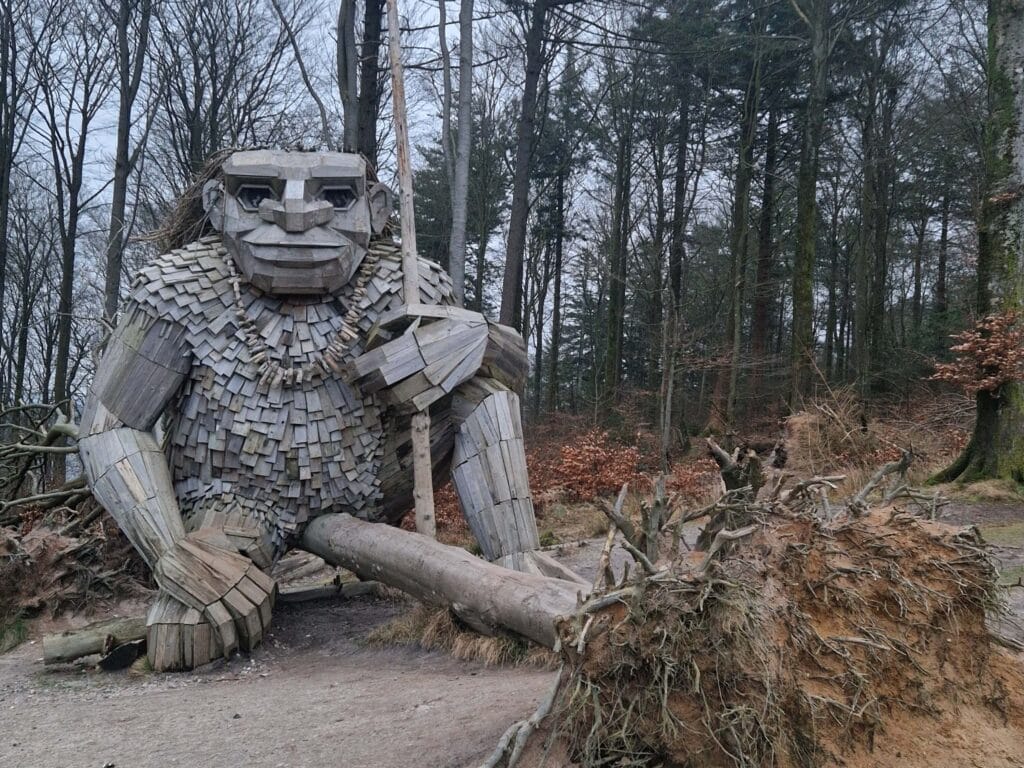
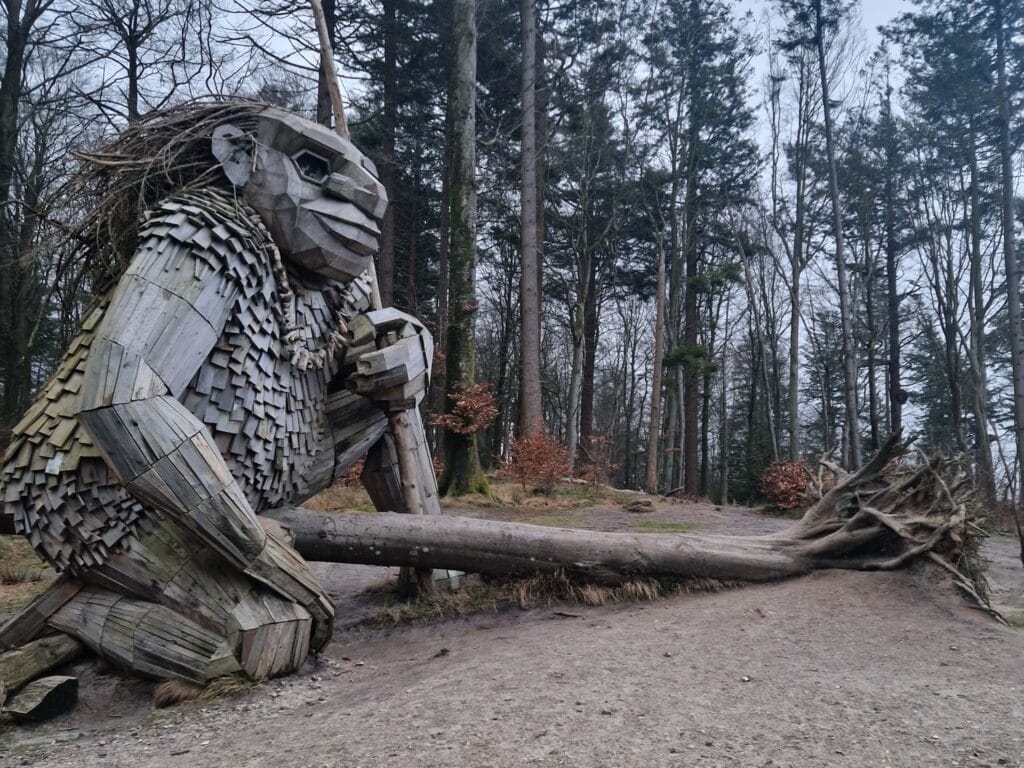
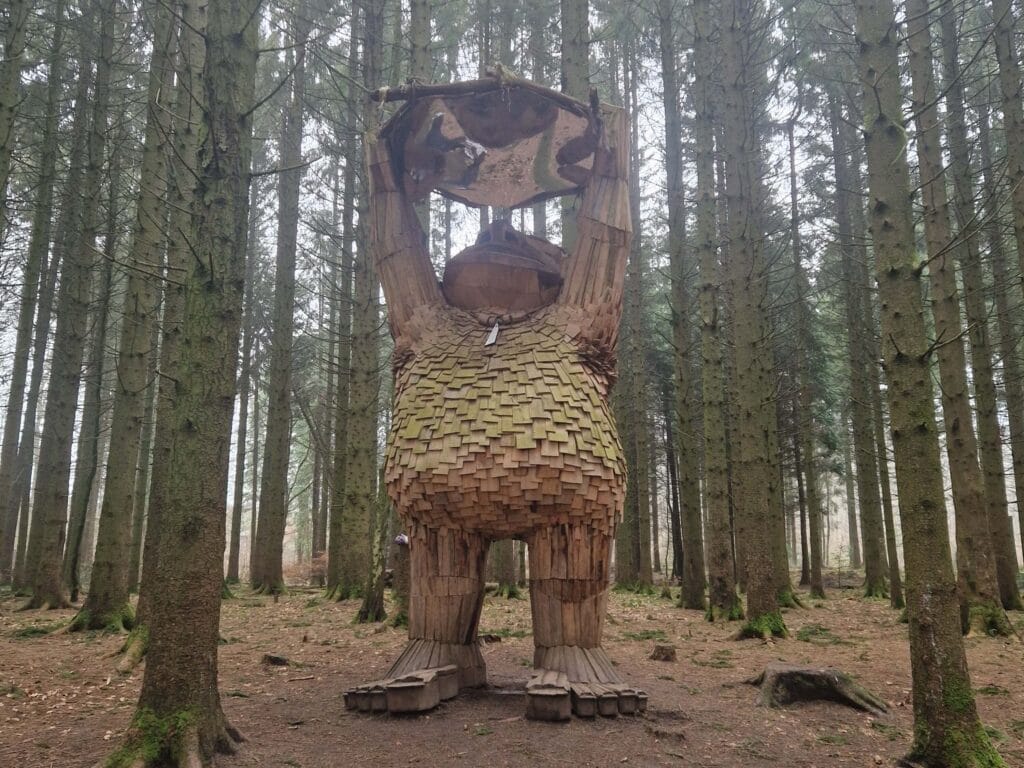
Thomas Dambo's sculptures, known as recycled wood giants, stand out for their uniqueness and the story they tell. These works not only beautify the landscape, but also convey a profound message about sustainability.
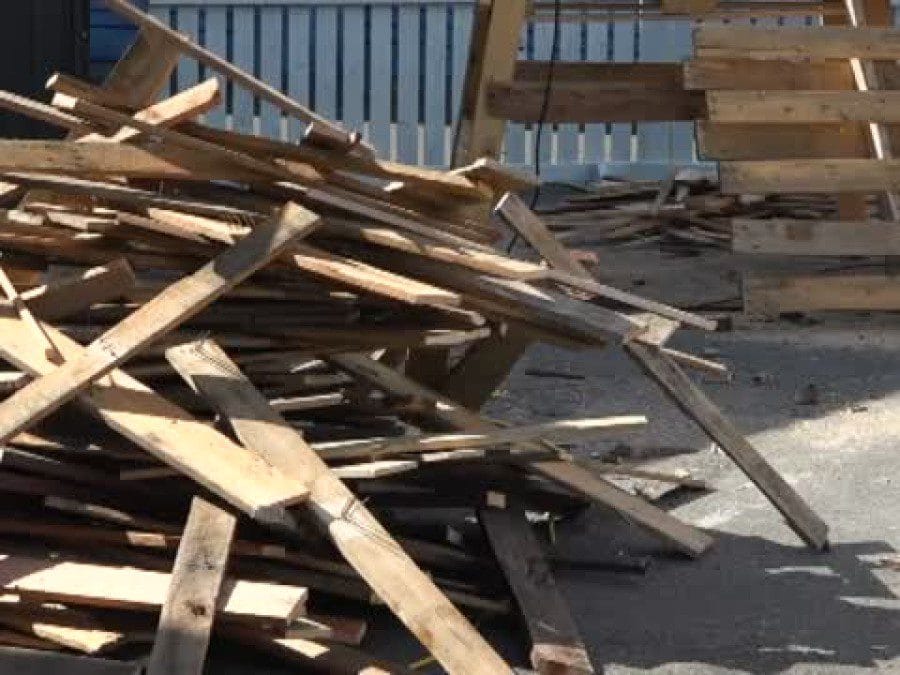
The process of building with recycled materials
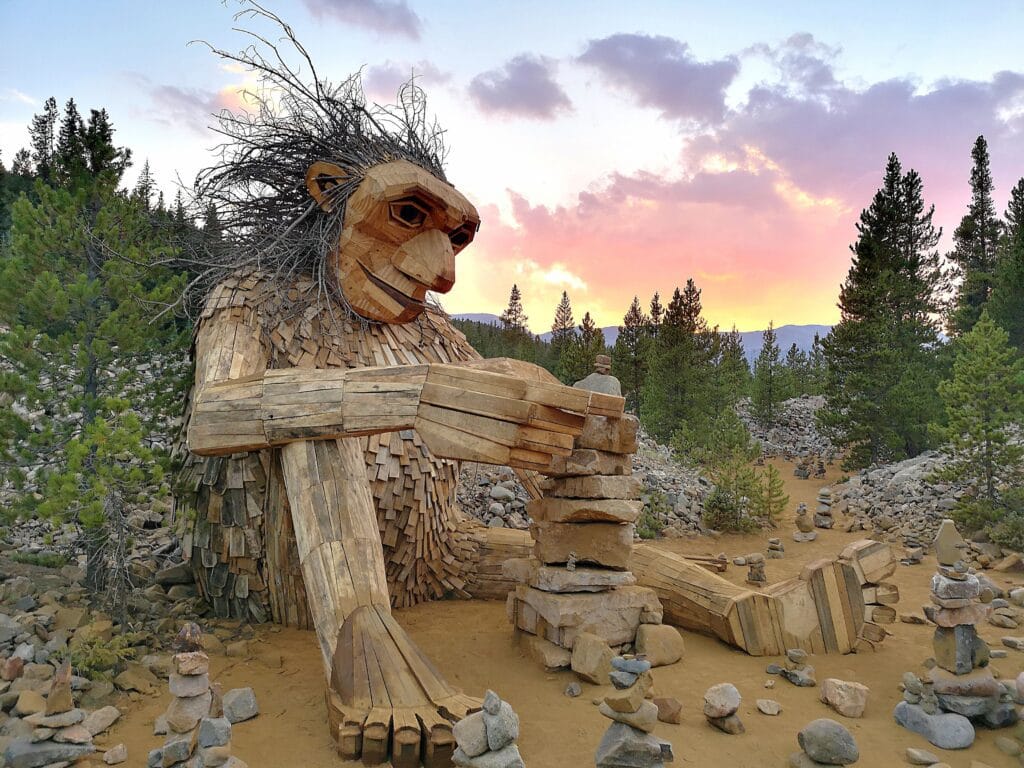
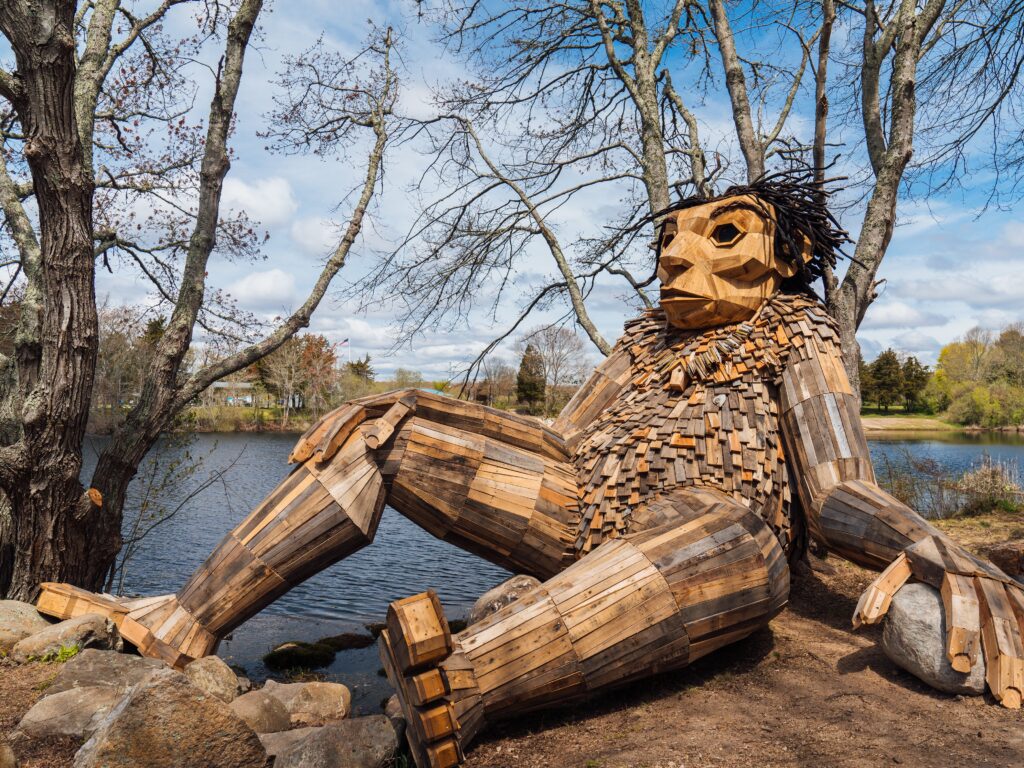
The technique used by Dambo in the construction of its giants is carefully thought out. It uses mainly recycled wood, salvaging pallets and other discarded materials. This process not only minimizes waste, but also gives wood a new life. From various pieces, Dambo manages to create imposing structures that seem to come to life in natural surroundings.
The role of volunteers in their sculptures
Community collaboration is one of the pillars of Dambo’s work. Throughout his projects, he invites local volunteers to participate in the construction of his sculptures. This participation fosters social cohesion and allows communities to bond more closely with art. Through this interaction, people not only contribute to the creation, but also become part of the story behind each giant.
Poems and clues to find the sculptures
Each Dambo giant is accompanied by a poem that invites visitors to explore further. These verses not only describe the sculpture, but also offer clues to the location of other hidden giants.
The use of the map to discover the giants
Thomas Dambo has created a playful experience through the use of maps that allow searchers to locate the various sculptures. This approach transforms the search into an adventure, encouraging people to enjoy the natural environment while discovering hidden art.
The exploration experience in Denmark
Exploring Dambo’s projects in Denmark becomes an exhilarating journey. Visitors not only contemplate the majesty of their sculptures, but also immerse themselves in the beauty of the surrounding nature. This experience reinforces the connection between art and the environment, promoting a more conscious and respectful lifestyle.
Thomas Dambo's work is deeply rooted in Scandinavian mythology, especially in the figure of the trolley. These mythical creatures, which hold a wealth of meanings, have been reinterpreted in the modern context through the sculptor's art.
Scandinavian culture and its influence
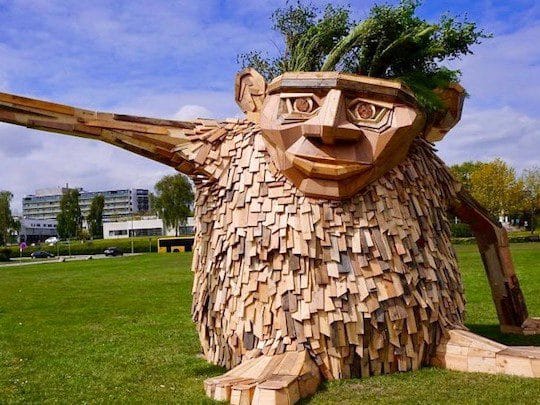
Trolls are an integral part of Nordic folklore, where they are often portrayed as guardians of nature. Their traditional depiction reflects ancestral fears and lessons about coexisting with the environment. In Scandinavian culture, these stories have served to teach generations about the importance of caring for the natural world.
Differences between mythological trolls and Dambo's trolls
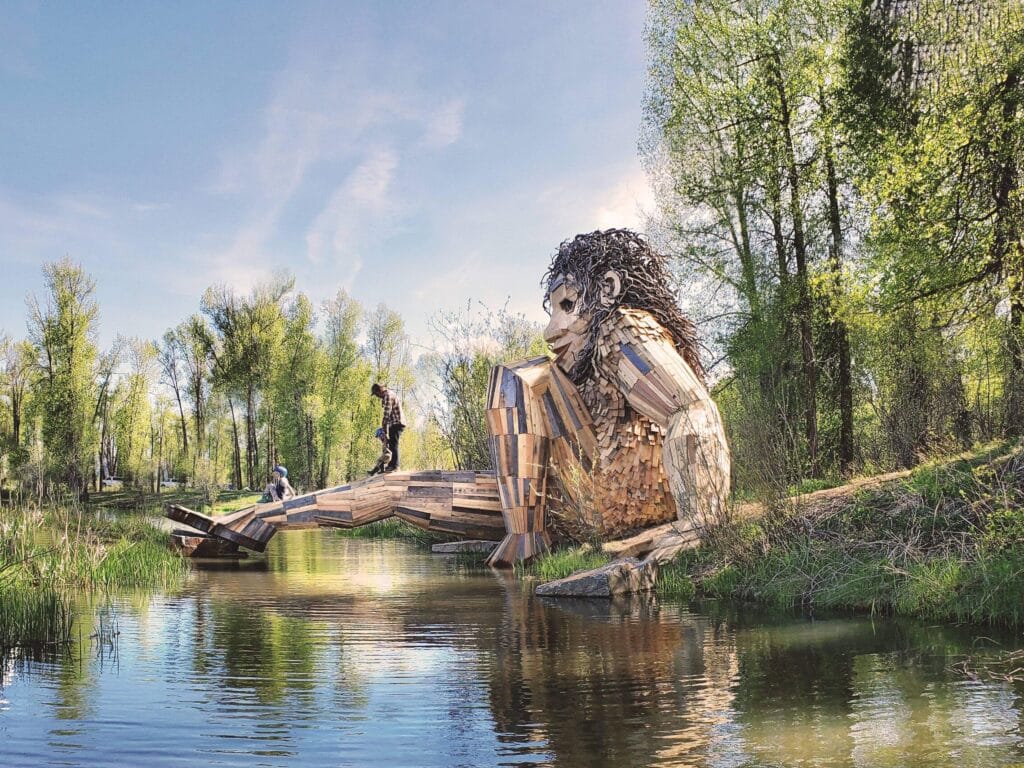
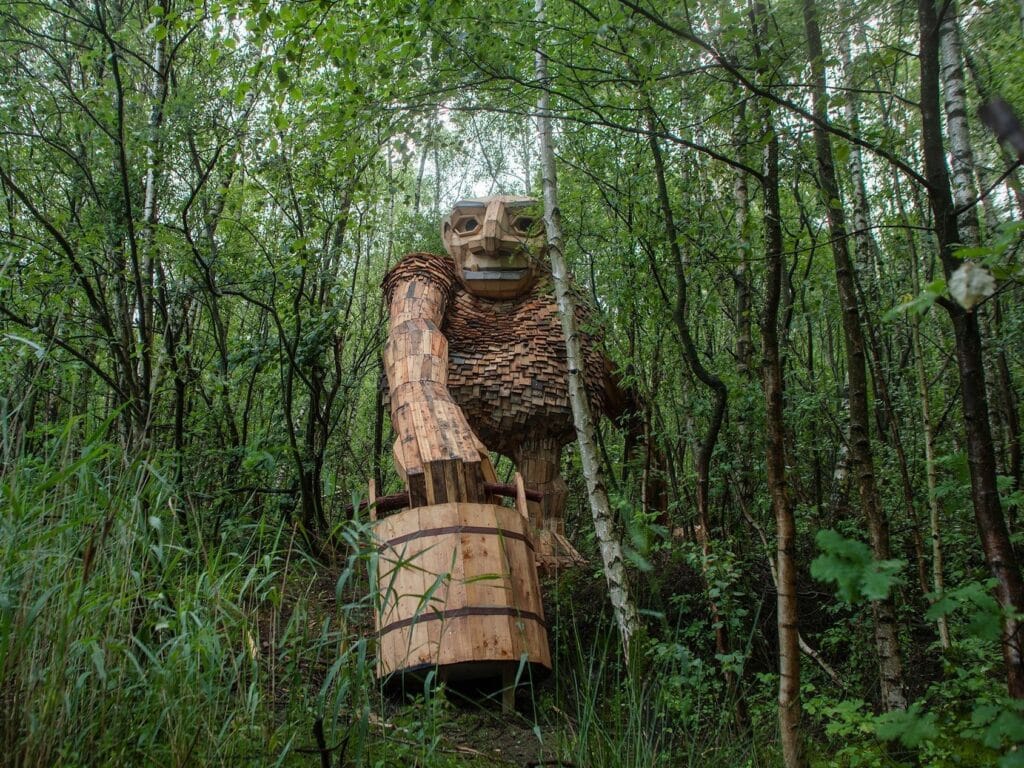
Dambo’s trolls diverge significantly from mythological ones. While the trolls of folklore often evoke fear, Dambo’s are friendly and approachable, designed to invite interaction and exploration. This transformation seeks to break historical stigmas and offer a more positive connection to nature.
Contemporary stories through art
Dambo’s sculptures redefine traditional narratives, integrating contemporary stories that address issues of sustainability and respect for the environment. Through his art, thought-provoking experiences are created about the relationship between humans and nature. Each wooden figure is not only visually stunning, but also acts as a symbol of hope and ecological awareness.
Thomas Dambo presents himself as a figure committed to creating a more sustainable future. His art becomes a tool to foster ecological awareness and community connection.

Environmental awareness and sustainability
Through his recycled wood sculptures, Dambo seeks to convey a clear message about the importance of recycling and waste reduction. The use of discarded materials in his works invites us to reflect on the value of objects that are commonly considered garbage. Thus, his work becomes a call to action towards a more environmentally friendly life.

The impact on the community and the world
Dambo’s mission is not limited to artistic production; it includes a strong community dimension. By involving local volunteers in the construction of his sculptures, he fosters a sense of belonging and collaboration. This reinforces the social impact of his work by making each participant an ambassador of ecological values.
How art connects with our nature
Dambo uses his art to establish an emotional link between people and the environment. The sculptures of giants made from recycled materials are not only visually stunning, but also serve as spaces for interaction. By experiencing his works, viewers connect with nature in a playful and educational way.
Thomas Dambo continues to innovate his art with projects that invite the community to participate in sustainability and creativity. His initiatives seek to connect art with nature and recycling.
'The Great Troll Folk Fest' and its objectives.
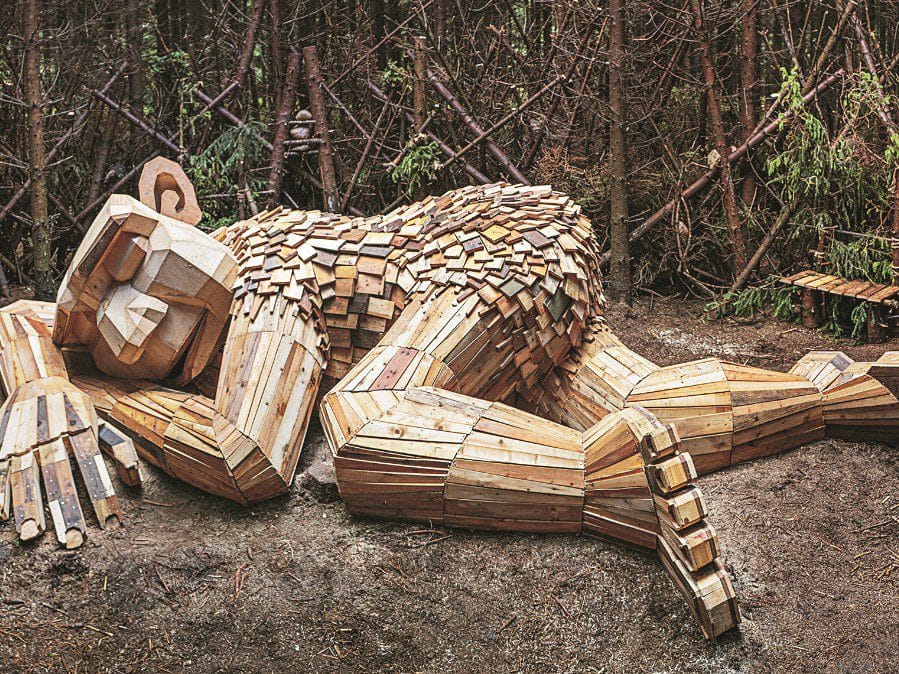
‘The Great Troll Folk Fest’ is an ambitious initiative that seeks to build ten new figures in lesser-known green spaces in Denmark. This project aims to:
- Encourage exploration of nature.
- To attract families and communities to enjoy art in its natural environment.
- Raise awareness about the importance of sustainability in a playful way.
New locations and collaborations in the south
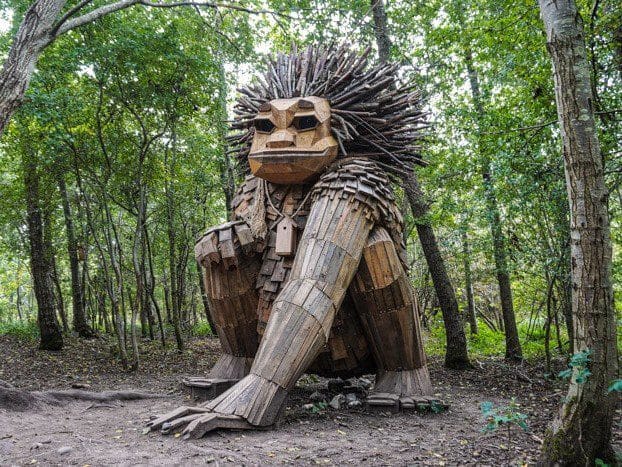
Dambo’s latest screenings include various locations in Southern Europe, where he plans to collaborate with local artists and communities. Wanted:
- Integrate native materials in their works.
- Invite residents to participate in the creation of sculptures.
- Promote sustainable tourism in the area.
Share latest developments and projects
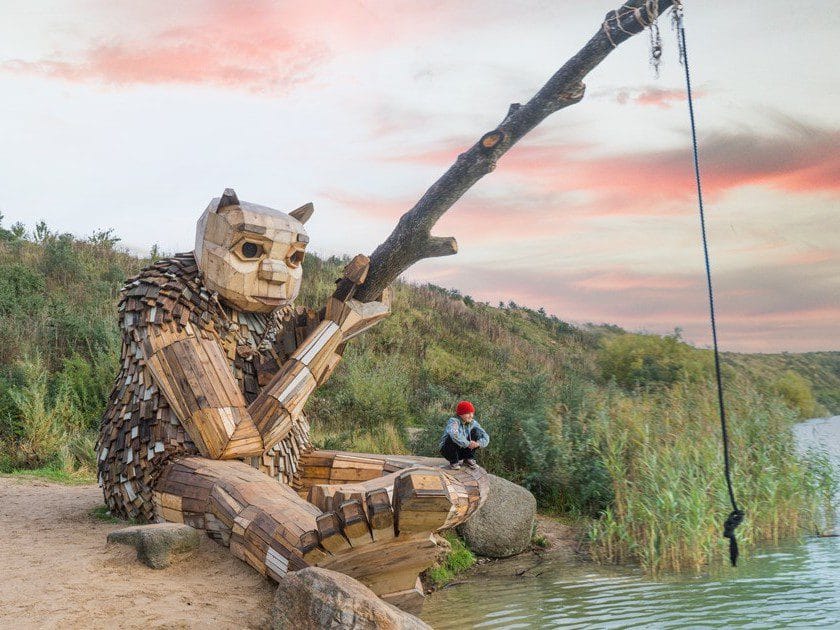
To keep the community informed about its activities, Dambo uses social networks and its website. Share:
- Updates on the progress of his sculptures.
- Information on events related to his works.
- Ideas and resources to promote recycling and sustainability.
Thomas Dambo's work has managed to transcend borders, generating considerable interest internationally. This impact is manifested in various installations and in his educational influence, promoting a dialogue on sustainability and recycling in art.
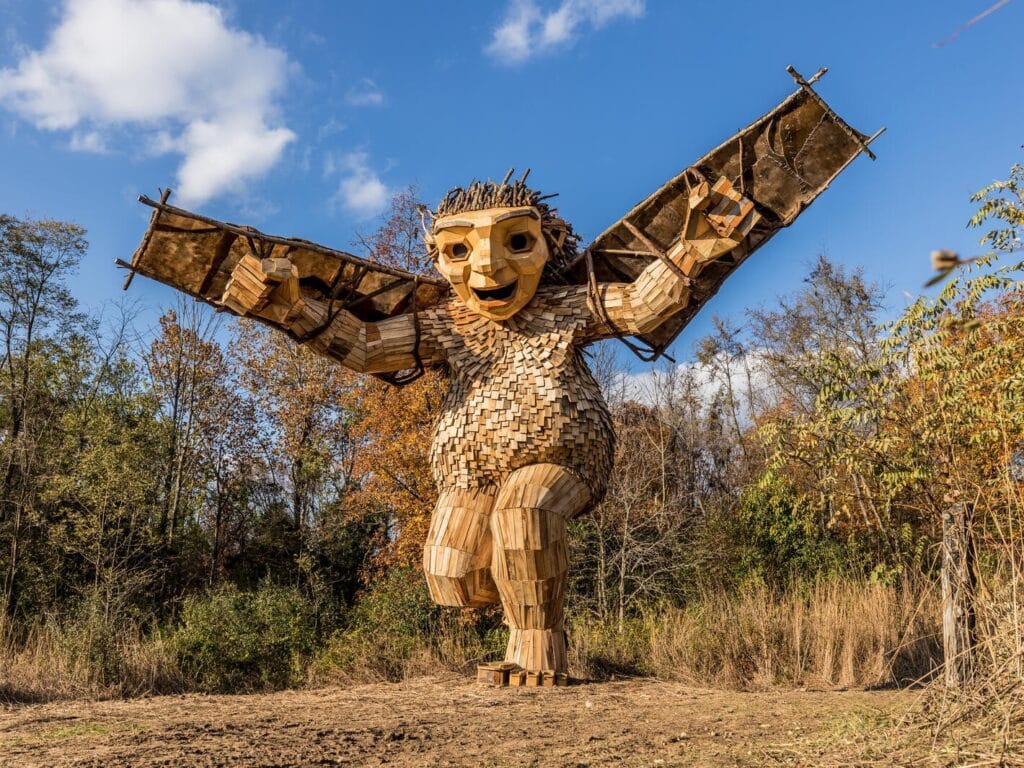
International facilities and their local adaptation
Dambo’s sculptures can be found in multiple cities around the world. Each installation is carefully designed to fit the local environment, using recycled materials specific to the area. This approach not only creates a connection between the work and the landscape, but also invites communities to participate in its development.
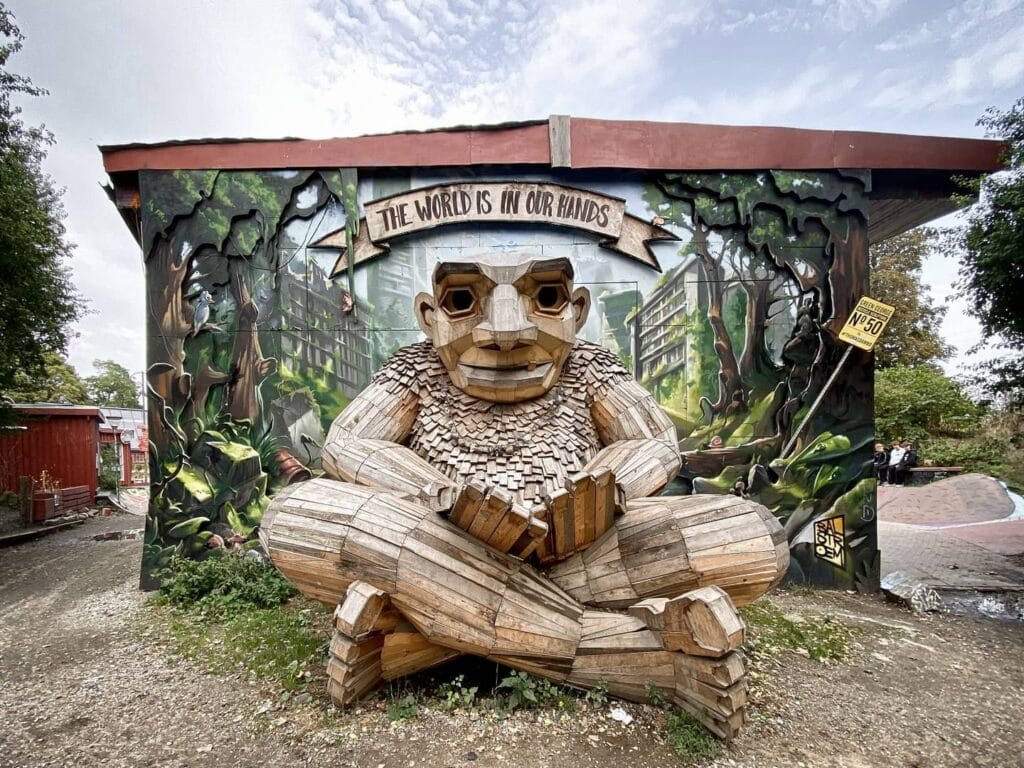
Media impact and its educational influence
Dambo’s work has captured the attention of numerous media outlets. Articles and reports highlight his message about the need to care for the environment. His art thus becomes an educational resource, used by schools to teach young people about the importance of recycling.
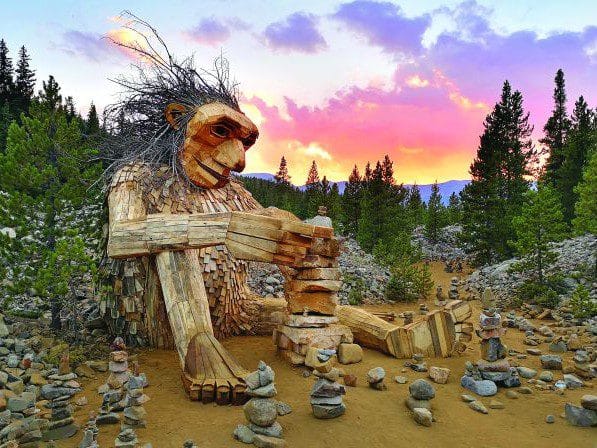
Connection between artists and the natural environment
Dambo promotes a deep connection between artists and the natural environment. Through his work, he encourages reflection on how art can be a tool for conservation. The interactions made possible by his sculptures invite the community to explore and appreciate their own relationship with nature.